
IFP Update: January 2026
📣 Announcements
The Launch Sequence is now open for new pitches:
With more than $25 billion flowing into AI resilience and AI-for-science from funders like the OpenAI Foundation and the Chan Zuckerberg Initiative, we’re building a collection of concrete projects to accelerate science, strengthen security, and adapt institutions for advanced AI. Submit a short pitch, and we’ll help develop your idea, connect you with funders, and get it built. We’re offering a $10,000 honorarium for published proposals.
Reed Schwartz joined us as an Associate Infrastructure Fellow. Reed previously worked at the Niskanen Center on housing and transportation policy.
Gaurav Sett joined us as a Non-Resident Fellow. Gaurav is a PhD student in Policy Analysis at the RAND School of Public Policy researching AI and national security.
📰 Media
The Financial Times and Foreign Affairs cited our H200 exports analysis. From Foreign Affairs:
“According to analysis by the Institute for Progress, if the United States exported no advanced chips to China, its compute capacity in 2026 would be more than ten times that of China’s. With aggressive H200 exports, however, the U.S. advantage could dwindle to the single digits — or, under some scenarios, disappear.”
The Center for Security and Emerging Technology published a report on the automation of AI R&D co-authored by Saif Khan: “When AI Builds AI.”
The White House Council on Economic Advisers cited IFP’s research in its report “Artificial Intelligence and the Great Divergence.”
Connor O’Brien wrote an op-ed for the Houston Chronicle discussing Governor Abbott’s new policy for H-1Bs in Texas.
📅 Events
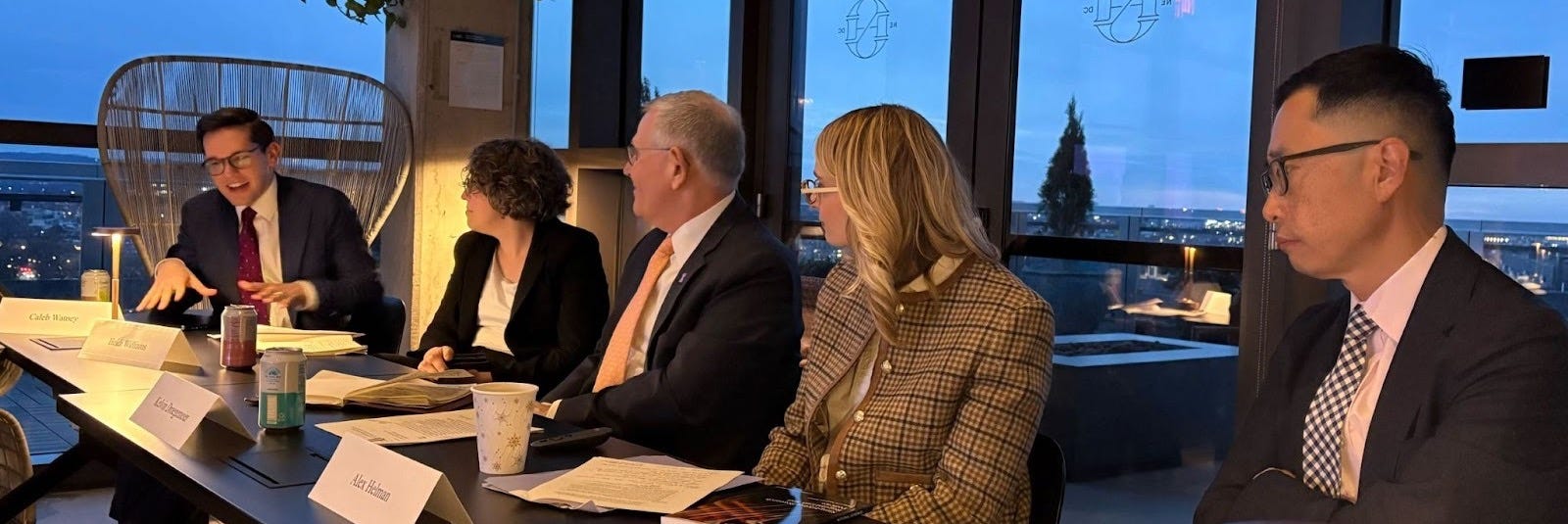
We hosted a Metascience Working Group meeting featuring former OSTP Director Kelvin Droegemeier, National Academies Senior Program Officer Alex Helman, and NIH Deputy Director for Extramural Research Jon Lorsch.
On February 11th, we’re co-hosting an FDA Transparency Happy Hour with 1Day Sooner and FAI. Join us for drinks and remarks on using AI for redaction and release of FDA records, the Common Technical Documents fund, and legislative opportunities to promote FDA transparency in 2026. RSVP here.
✍️ Policy Reports
Protect Human Subjects, Not Bureaucracy. Ruxandra Teslo and Matthew Esche examine how Institutional Review Boards prioritize procedural compliance and slow down research. They propose encouraging federally funded investigators to choose among accredited IRBs, introducing competition and accountability into the system.
The Cost of the OPT FICA Exemption. Jeremy Neufeld and Violet Buxton-Walsh analyze a tax exemption that allows many employers to hire international students on Optional Practical Training while avoiding Social Security and Medicare contributions. They find that closing this exemption would raise $27–36 billion over 10 years.
Proxy Praxis: Why Validating an Endpoint Took 12 Years. Ruxandra Teslo examines why it took 12 years to validate bone mineral density as a surrogate endpoint for osteoporosis trials, despite the biomarker being in clinical use since the 1980s.
🏛️ Statecraft by Santi Ruiz
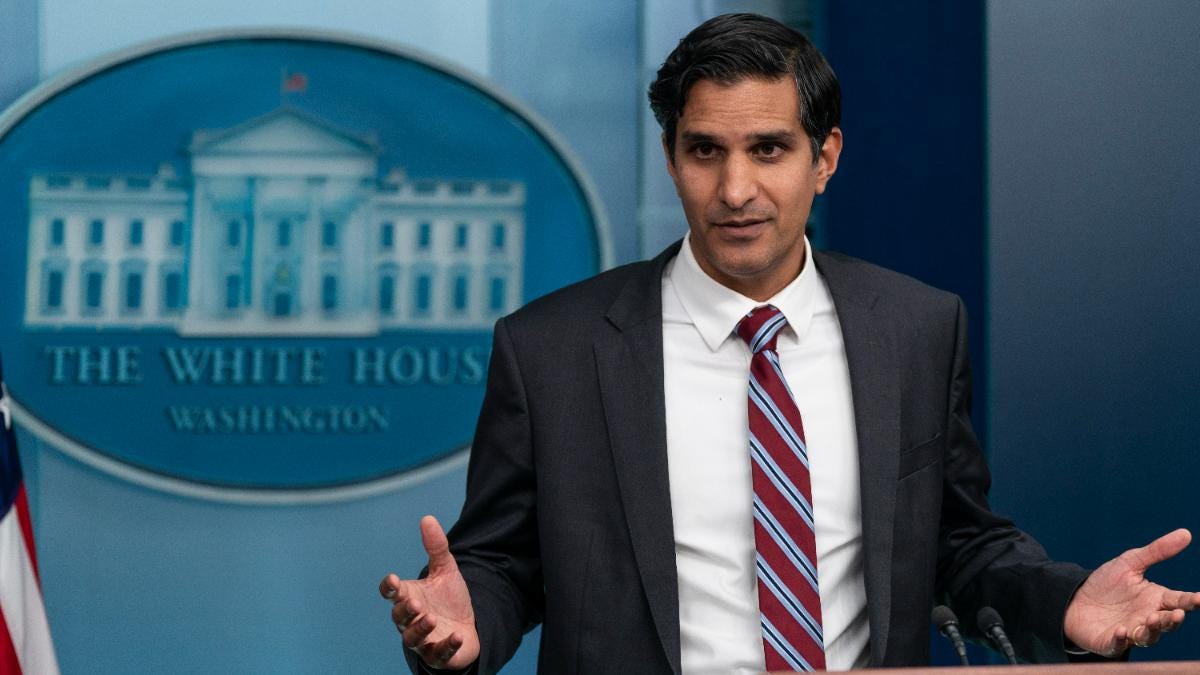
One Year of Trump’s Economic Statecraft. Santi interviews Biden officials Daleep Singh and Peter Harrell, as well as IFP’s Arnab Datta, about the Venezuelan oil seizure, the China trade deals, the MP Materials rare earths investment, and economic statecraft lessons from the administration’s past year.
What’s Wrong with NIH Grants? Santi interviews Mike Lauer, the former NIH Deputy Director for Extramural Research. They discuss how the grant system went from funding 60% of applications in the 1950s to just 10% today, why scientists spend 45% of their time on paperwork instead of research, and how block grants could fund more breakthrough science.
🏗️ Construction Physics by Brian Potter
Do Commodities Get Cheaper Over Time? Brian looks at 124 commodities and found that prices have historically fallen — until 2000. The key pattern: the more production resembles manufacturing, the more prices fall.
On Technologies vs. Commodities. Brian examines the popular claim that renewables will keep getting cheaper while fossil fuels won’t. He finds the distinction is real but overstated: both can see falling prices from tech improvements, and both can face resource constraints.
The Surprisingly Long Life of the Vacuum Tube. Brian traces how vacuum tubes birthed a surprisingly sprawling technological ecosystem: from triodes enabling transcontinental telephone lines to magnetrons in microwave ovens and klystrons in cancer treatment machines.
How Did TVs Get So Cheap? Brian investigates why a 50-inch TV that cost $1,100 in 2001 now costs under $200. The main driver is that the giant glass sheets used in LCD manufacturing have grown nearly 100x larger over the past few decades, dramatically reducing equipment costs per unit of display area.
🏭 Factory Settings by Mike Schmidt, Todd Fisher, and Sara Meyers
The Paperwork Reduction Act Doesn’t Reduce Paperwork. In a crosspost with Jen Pahlka’s Eating Policy, Sara Meyers details the irony of PRA compliance. To create a voluntary 5-minute meeting request form, CHIPS had to produce a 20-page screenshot document, a 7-page supporting statement, and three notices.
Consultants: Tool, Not Crutch. Sara Meyers explains how CPO used more than 100 consultants effectively. A key lesson: specialized work (financial modeling, environmental review) outsources well; general program management does not.
How to Rebuild American Industry. In this crosspost from American Compass’s Commonplace, Mike Schmidt joins Oren Cass to discuss what it took to stand up the CHIPS program: negotiating with chipmakers, combining grants and tax credits, and what “everything bagel” critics missed.
Eight Legal Challenges CHIPS Navigated. Mike Schmidt describes how legal negotiations over clawbacks, indemnification, and change-of-control rights became the central challenge of closing CHIPS deals, often escalating to CEOs and boards.
🔬 Macroscience by Andrew Gerard
NSF Tech Labs FAQs. Andrew breaks down Tech Labs, which will invest up to $1 billion over five years to fund independent research organizations with $10–50 million annually. Like IFP’s X-Labs framework, Tech Labs moves from incremental grants toward flexible, milestone-based funding.
Five Prescriptions for Simplifying Science Policy. Andrew reviews the National Academies’ 53 recommendations for cutting science red tape and identifies the five most tractable reforms that don’t require new funding or congressional action.
👋 Tweet for the Road

