
IFP Update: July 2026
We saw a major housing policy milestone in July: the 21st Century ROAD to Housing Act became law. We also launched a new data tool on historic preservation review, published work on the Genesis Mission and federal metascience units, and welcomed new colleagues.
👋 Welcome
Ryan Redmer joins the immigration team after five years at Microsoft, where he liaised with the federal government and helped employees navigate the changing immigration landscape.
Sebastian Quaade and Adam Kroetsch join the biotechnology team.
Sebastian was most recently at the University of Chicago’s Market Shaping Accelerator, where he supported projects on climate and pandemic-preparedness innovation.
Adam spent a decade at the FDA and has held roles at the Duke-Margolis Institute for Health Policy and MITRE. He also writes a newsletter on clinical trial abundance.
Joseph Fridman joins the editorial team, which he will support while based in Brussels. Joseph previously led communications at Convergent Research and Ginkgo Bioworks, and regularly supports experts working to communicate complex ideas to the public.
📣 Announcements
The 21st Century ROAD to Housing Act became law. The bipartisan package includes reforms intended to expand supply and lower barriers to building, from federal environmental review and local planning grants to modular and manufactured housing. The final law also preserves an exception for build-to-rent properties in its restriction on institutional purchases of single-family homes. IFP’s infrastructure team analyzed the bill as it moved through Congress, wrote an analysis of impacts and solutions to the build-to-rent provision, and successfully argued for a more pro-supply package. The work now moves to implement this landmark law at federal agencies and state and local governments.
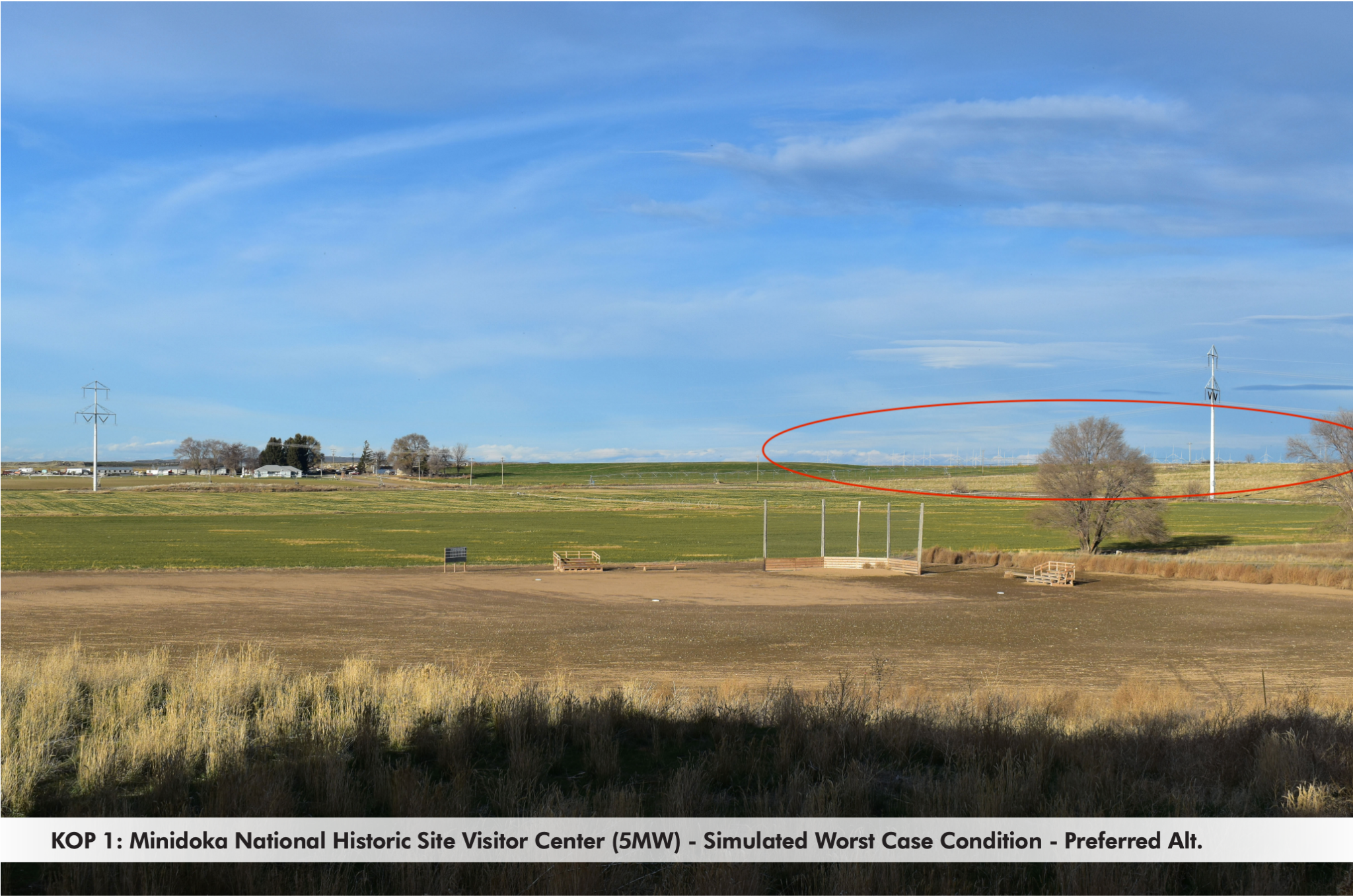
APE Explorer: Historic preservation reviews disproportionately burden clean energy and transmission. IFP analyzed 96 federal energy project reviews to see how Section 106 of the National Historic Preservation Act affects different kinds of infrastructure. We found that clean energy and transmission projects had review areas about ten times larger than fossil fuel projects and were more than eight times as likely to receive an “adverse effect” finding, triggering additional process, delay, and mitigation. The explorer lets readers compare the projects and download the underlying data. The visual impacts of new energy projects are typically minor, as seen in this image of a distant wind farm:
📰 Media
Volts featured Will Poff-Webster in an episode on transit abundance, discussing why the United States pays roughly three times the international average to build transit, and how reforms to federal funding, planning, procurement, and project delivery could bring costs down.
The Atlantic spoke with Will Poff-Webster about proposals to pay existing residents when their communities allow more housing. Will emphasized how local opposition can be rooted in status quo bias.
MTS hosted four recent appearances by IFP experts who helped monitor the situation:
Olivia Scharfman explained her taxonomy of AI “doomers” and “optimists.”
Jonah Weinbaum discussed CAISI’s role in federal AI policy and the difficulty of attracting technical talent to government.
Will Poff-Webster described America’s shortage of smaller, cheaper homes and the zoning rules that constrain supply.
Dan Turner-Evans made the case for federal science agencies to experiment with more ways of funding research.
unSILOed featured Brian Potter in a conversation with Greg LaBlanc about why construction productivity has lagged manufacturing and agriculture, and how scale, fixed costs, tacit knowledge, and barriers to automation shape the industry. He also spoke with Wealthfront’s Vested Interest about superwood, enhanced geothermal, grid-scale batteries, and manufactured homes.
Cato featured Ben Schifman in a panel discussion with Jennifer Huddleston and Travis Fisher on why data-center growth need not raise household electricity rates — and how faster grid expansion could turn large new loads into an investment opportunity.
Fortune quoted Alec Stapp praising the White House’s science funding experiments while arguing that the report missed America’s biggest advantage: attracting and retaining global scientific talent.
The Hoover Institution published Amy Nice’s “Breaking the ‘Front Door’ of the International STEM Talent Pipeline Will Erode America’s Competitive Edge,” which warns that restrictions on international students would weaken the US STEM workforce and economic growth.
Amy Nice, Jeremy Neufeld, and Michael Clemens also published “Class Dismissed” with the Peterson Institute for International Economics, estimating that a sustained one-third decline in foreign STEM graduates would shrink the high-skill STEM workforce by 6.2 percent overall and 11.5 percent at the PhD level.
Axios cited Jonah Weinbaum and Arthur Tellis’s estimate that CAISI needs $84 million annually to carry out the administration’s AI-readiness mandate.
The Next Platform highlighted Dan Turner-Evans’s case for narrowing the Genesis Mission to a handful of clear, demonstrable goals.
✍️ Policy Work
Picking the Right Challenges for Genesis Mission. Dan Turner-Evans makes the case that the Department of Energy should narrow Genesis Mission’s 26 challenge areas, focusing on concrete outcomes, and clarify whether its priority is a general AI-for-science platform or a smaller set of high-leverage mission problems. He argues that a more focused program would be easier to fund, evaluate, and explain.
Science Agencies Need Metascience Units. Matthew Esche, Andrew Gerard, and Jenn Gustetic propose that nimble teams inside federal science agencies should run experiments and analyze internal data to help advance scientific progress. Housed in agency leadership offices, these units could test improvements to program design and help programs scale the approaches that prove fruitful.
🏛️ Statecraft by Santi Ruiz
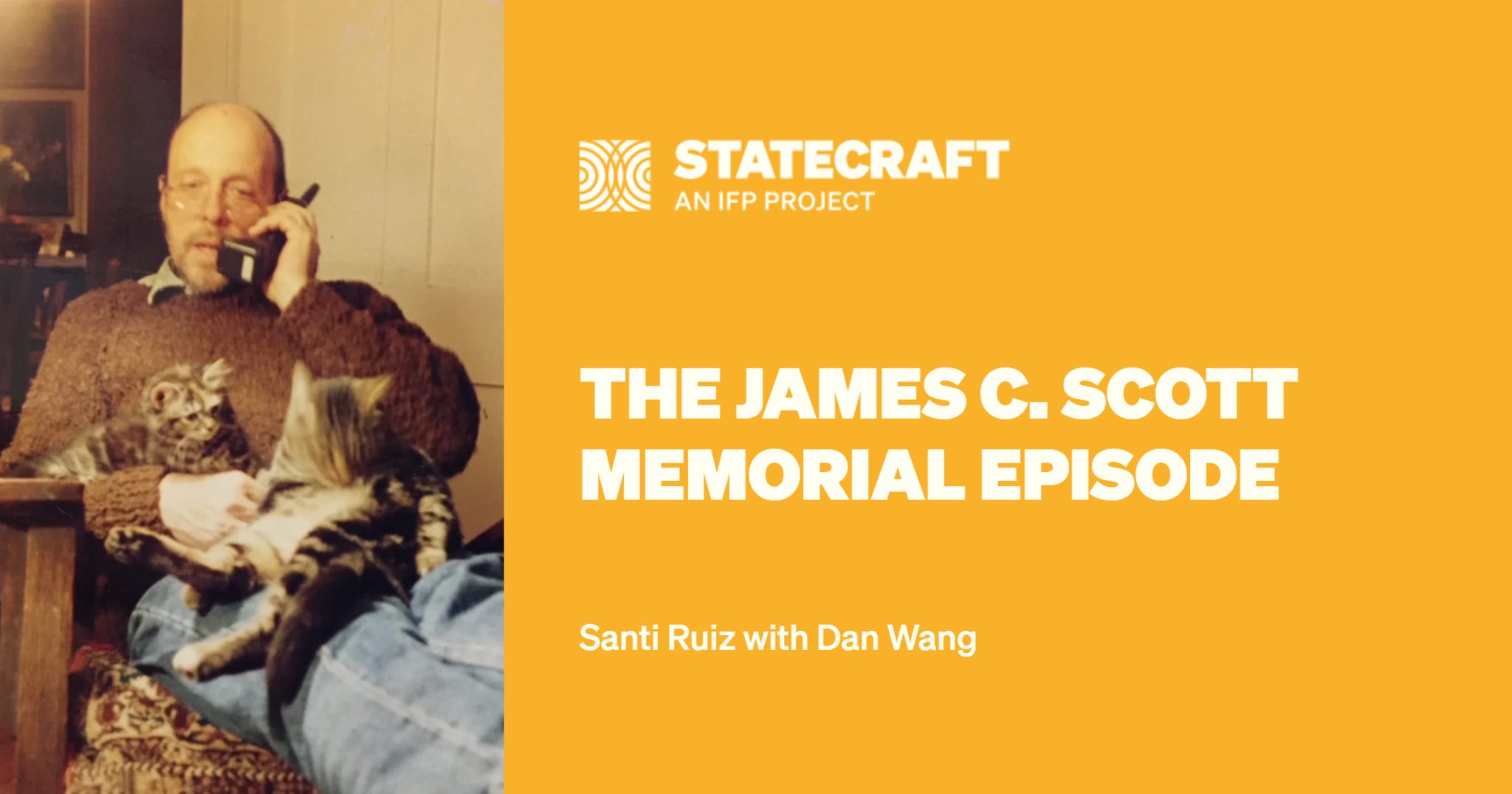
The James C. Scott Memorial Episode. Santi is joined by Dan Wang to discuss the life and work of James C. Scott. They talk about how Scott’s fieldwork shaped his account of state capacity and peasant life, how geographical features and practices of everyday resistance constrain authority, and why Scott’s ideas about legibility remain ever-useful in the age of large language models.
🏗️ Construction Physics by Brian Potter
How Predictable Are Laws? Brian uses an AI model to compare the expected and actual effects of 239 federal laws passed over nearly five decades, finding that most laws had roughly the effects intended. About 11 percent diverged substantially, often because courts, agencies, later Congresses, or the wider world behaved in ways that the original lawmakers did not anticipate.
The Fall and Rise of Screwworm. Brian traces how the United States eradicated the vicious screwworm by growing and air-dropping hundreds and hundreds of millions of sterile male flies, eventually pushing its defensive barrier south to a narrow strip of land in Panama. With the parasite now resurgent in Texas and New Mexico, Brian argues that the program may have become a victim of its own success.
Can We Lower Construction Costs with Cheaper Labor or Materials? Construction’s on-site nature makes cheaper labor difficult to access, while many common building systems are already close to the frontier of material efficiency. Brian shows that some materials may still have room for lower prices, but permitting barriers, tariffs, and risk aversion make those savings difficult to capture.
Why Is Everyone Trying to Build a Solid-State Battery? Brian teaches us the mechanism, pros, and cons of lithium-ion batteries, and explains how future solid-state batteries could outperform conventional lithium-ion batteries. Today, the new technology is still immature and commercial viability remains uncertain.
🏭 Factory Settings by Mike Schmidt and Sara Meyers
How CHIPS Adopted Risk Practices from Banking. Andrew Kuritzkes, Chief Risk Officer of the CHIPS Program Office, explains how they built an independent risk function modeled on private-sector finance. Future government investment programs should have sophisticated internal risk analysis that balances total risk against strategic returns, but should not try to eliminate risk so thoroughly that programs cannot achieve their goals.
Govern Your Data Before You Have Any. Sara Meyers recounts how CHIPS pre-designed a data-governance regime, using a sensitivity-tagged inventory, least-privilege access, automated controls, and explicit staff accountability. The system helped prevent serious technical or accidental breaches. Sara concludes by arguing that future programs should build flexible workflows early, pairing architecture with culture, since rules alone cannot prevent deliberate leaks.
🔬 Macroscience by Andrew Gerard
Five Reasons to Study the Economics of Innovation. Matt Clancy launches IFP’s free, 11-lecture Economics of Ideas, Science, and Innovation video course. In the first lecture, “Why should we study the economics of ideas?”, Benjamin Jones explains what makes ideas distinctive economic goods — and how spillovers and market failures create a case for public support of innovation.
Chad Jones on Idea-Based Models of Economic Growth. In the second Economics of Ideas lecture, Chad Jones explains how innovation has powered long-run economic growth — and how AI might reshape it. His “weak links” model suggests AI could eventually bring profound abundance, but economy-wide growth effects may take decades to materialize.
👋 Tweet for the Road
 Connor O’Brien@cojobrienIn 2015, Mayor Bowser launched Vision Zero to eliminate traffic deaths in DC by 2024. Since then, traffic deaths have not declined at all and are up by >100% this year. Worth remembering as the DC Council considers legalizing AVs that are about 90% safer than human drivers.
 6:36 PM · Jul 22, 2026 · 2.48K Views2 Replies · 10 Reposts · 42 Likes
